
Stack thinking
Options for reshaping the DNA of governments


Does government have to be organised as a series of pyramidal ministries and agencies, just as it was in the 19th century? Or are there very different alternatives?
This piece looks at the relevance of ‘stack thinking’ and how it can help make goverments faster, more efficient, resilient and with a better mix of centralisation and decentralisation. These ideas originate in computing and communications and are fundamental to how the Internet works. They offer ways to break free from the default of pyramid-like organograms with systems that can make the most of AI as well as human brainpower.
In this short piece I look at what stack thinking is; how it can be applied; and how it could transform the organisation of government in the future.
What is a stack?
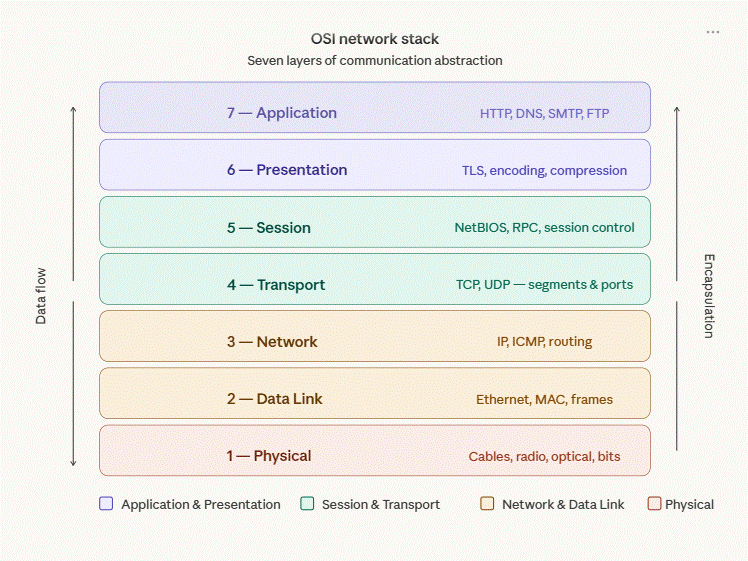
The idea of the stack comes from computing and communications. I first came across it in the 1980s when it was a dominant way of thinking about information architectures through the OSI model (pictured below). The stack is a ‘layered hierarchy of protocols’, each providing services to the layer above and depending on services from the layer below. Each layer can interact with the others without knowing how they work and any layer can be replaced or improved without disturbing the others (see below).
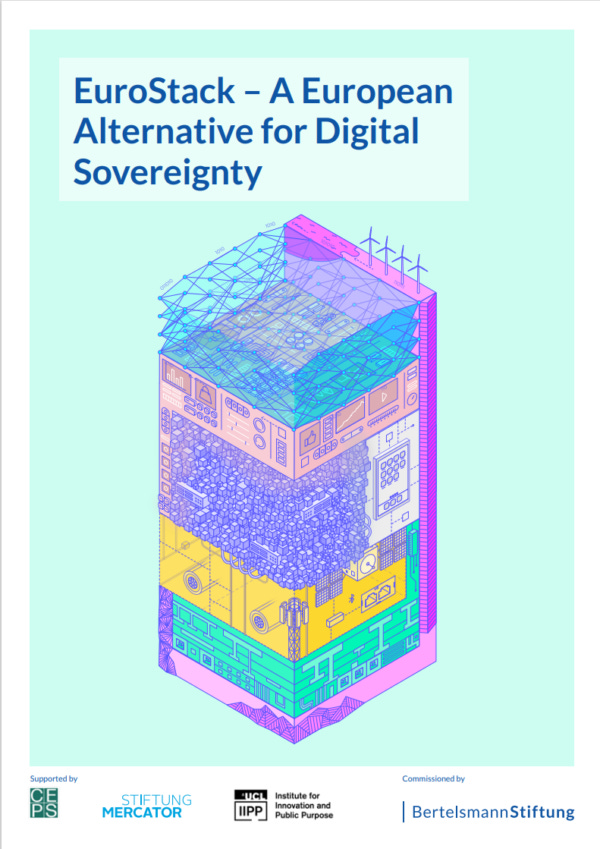
Since then, it’s become ever more common as a way of thinking about digital design. Software has its stacks (from databases through apps to APIs) and the concept has started appearing in policy, notably through the India Stack which then inspired the Eurostack, Singapore’s GovTechStack, the Citizen Stack and others. There is also much debate now about the ‘AI stack’ and whether nations should seek sovereignty in different parts of it.
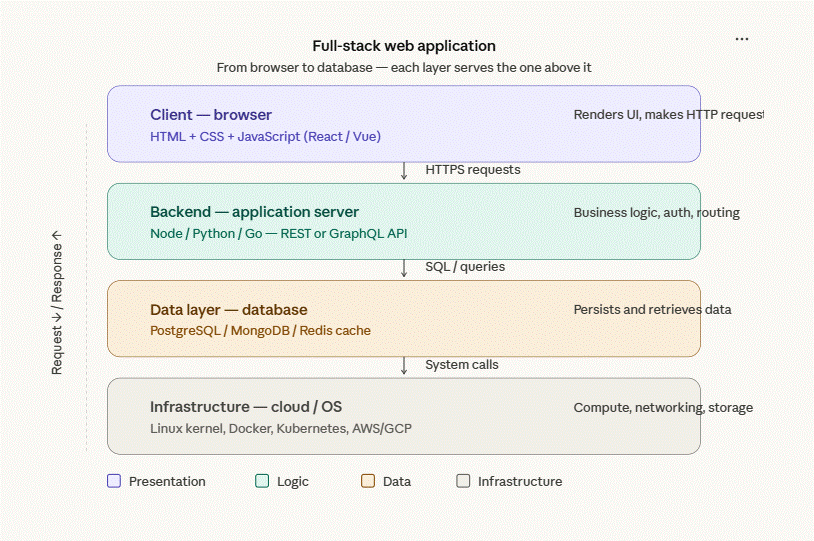
One of the ideas underpinning stacks is that to help a system work you don’t have to have a single department or agency or ministry in charge of everything, but can instead design a series of layers, and how they interact, with each layer run separately, allowing for mutual coordination in flexible ways.
The Internet is the prime example. It was organised through protocols rather than a single hierarchical organisation and based on TCP/IP which collapses the seven layers of the OSI stack into four layers — Network Access, Internet, Transport, and Application.
The web (HTTP) was then built on top of TCP/IP decades later, and then everything from payments and video streaming to peer-to-peer networks were layered on top without requiring changes to the layers below, with APIs allowing many kinds of collaboration and openness to flourish.
Innovation could happen at one layer without disturbing others. Even though the Internet has plenty of hierarchical organisations, and relies on a sometimes-forgotten physical infrastructure of cables and connections, this architecture allowed extraordinary decentralised creativity and resilience.
Applying stacks to new fields
The broader application of stack thinking extends the original idea of layered protocols in two main ways:
First, it suggests that any task can be broken up into layered functions rather than having to be run from a single organisation. This has wide application. In business, it’s become common to use complex webs of licensing and franchising. This is why Amazon doesn’t need to own its warehouses and airlines don’t need to own any planes (and many existing fields combine layers, often with different time horizons: buildings for example, combine the underlying building structure, the exterior shell, the internal structure, decor and uses).
The second related idea is that standardised modular elements can be provided horizontally in ways that allow vertical functions to work better. Again, this is well understood in some fields and some organisations, and it’s precisely because horizontal communication is so much easier and cheaper than in the past that the traditional models of vertical silos and pyramid-like organograms are so anachronistic.
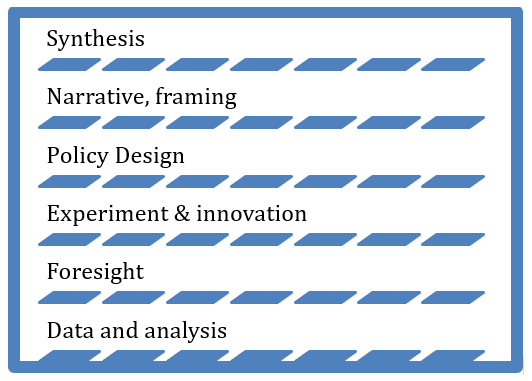
I showed one variant of stack thinking in my recent paper on strategy, suggesting how a ‘strategy stack’ could work. Not all of the activities in the picture below needed to be run out of a single team. Rather, what mattered was that each was done well and that there was a capability to weave them together (what I call ‘composability’ later in this piece) to feed into synthesis and action.
Our new TIAL paper on emergencies will show why stack models can help cities think about all the ways they need to prepare for, monitor and respond to crises, whether floods, fires or terror attacks, again with a series of layers to handle:
· Monitoring and data
· Emergency preparation and simulations
· Emergency services
· Real-time responses linking many agencies, including control centres.
· Active roles for civil society and business
· Learning after crises
Similar ways of thinking may be relevant to everything from urban regeneration to technology policy, the provision of care to democracy, and there are parallels in physical fields such as containerisation in shipping, where standardised elements allow for much more flexibility (and the containers end up being literally stacked).
Stacks as government DNA
The implication of stack thinking is that governments in the future could replace systems dominated by vertical silos and semi-autonomous ministries and agencies, using laws and directives passed down through hierarchies, with a stack-like mix of vertical and horizontal elements. The analogy is with DNA which provides a small number of building blocks - a, t, g and c - that can be combined and recombined in a myriad of ways.
What might this mean in practice? First governments would develop suites of modular elements that can be used to help with everyday tasks: such as HR functions, budget planning, consultation and engagement, data management, meeting formats and professional roles, court procedures and tax payments, procurement and regulation. Some of these would be organised in asset libraries - commissioned, curated, and tailored to the huge range of tasks needed across government - and then made available across the public sector.
This would include many AI tools - some very generic, some highly customised, some based on open data, others on very sensitive data (as set out in Leo Quattrucci’s TIAL paper), stretching all the way from LLMs (such as the Dutch governments GPT-NL) to fraud detectors (such as the UK’s Fraud Risk Accelerator) or Estonia’s AI toolbox, and many of these will be increasingly agentic (which will need to be carefully governed as well as used).
The key point is that any individual function or service can then combine these computational capabilities with highly skilled people and teams able to make sensitive judgements about everything from health to crime, politics to war (and sometimes able to block, curtail or constrain AI).
A primary school, for example, combines the central roles of teachers doing teaching, parents providing support and pupils who have to do the learning, but also, around them, curriculum planning, scheduling, enrolment, homework support, assessment and many other elements, some of which can be highly standardised and combined to improve the collective intelligence of the system as a whole. A stack approach would look at the physical buildings; the data; the operating systems; the applications and teaching; and then the metacognition or learning of the system as a whole, as a series of layers, with the school, which could be wholly autonomous, assembling the elements it needs.
Tax collection likewise can be broken down into a series of elements, from assessment and payments to fraud detection. Regulation usually involves a series of capabilities to monitor, inspect, adjudicate, nudge, fine and update, many of which are common across the 90 or so regulators in the UK.
Stack thinking can also be used to rethink existing systems. Adult social care, for example, involves some very personal, face to face elements, including peer and family support, and some which can be more standardised with shared methods for handling data, evidence, CPD, financial management, personal budgets, predictive risk modelling, user feedback and case management. However, this way of thinking remains rare, though some commercial providers use elements of stacks, albeit usually keeping essential information proprietary, one of many reasons why care systems struggle to make use of their own intelligence.
Emergencies – like the current fuel crisis – are also a good example where governments could use stack frameworks to rapidly pull together a range of different capabilities to monitor data, predict and do scenarios, track what other governments are doing, engage with key stakeholders and communicate to the public, for example with slices of officials’ time (eg 20%) combined for a time in flash teams as well as shared real-time knowledge management.
Stack thinking also has obvious relevance to how governments think and organise their own knowledge. As I’ve argued before centres of governments in the future should be organised much more around intelligence - so that the state knows what’s happening, what the options are and what others are doing, with a default of sharing this intelligence as widely as possible. This work is much easier to organise as a stack, with different teams focused on data, evidence, tacit knowledge, foresight, innovation etc, and with living knowledge graphs capturing the state of knowledge on any topic, federated across departments and agencies. But that makes it all the more important to have effective methods for integration, orchestration and synthesis to guide decisions.
Stacks and digital transformation
These are not new ideas even if they still sound unfamiliar to many. The digital teams creating modular tools for authentication and payments (pioneered in Estonia and India) have moved in this direction over the last 20 years, while the UK’s GDS (through initiatives like ‘Notify’ and ‘Verify’) and later the iAI team, have also created modular products (such as AI for tasks like consultation).
Estonia’s X road has long been an exemplar, providing tools that can be used for secure data exchange not just by ministries but also by utilities and banks, handling authentication and other tasks. India’s Digital Public Infrastructure stack extends this to payments of all kinds, public services, education, markets and courts.
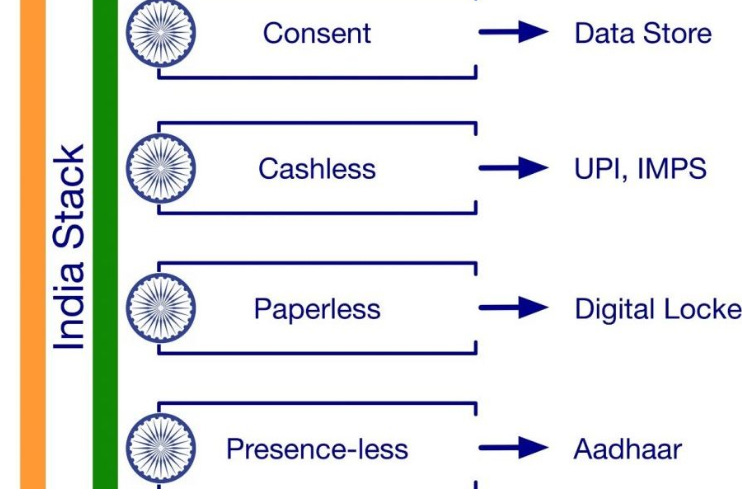
More recently the rise of agentic AI, and pioneering work by Ukraine and others, has encouraged much thinking about the future of the government techstack (see eg this from the Global GovTech Centre in Berlin, which also analyses why progress has been slow). The commercial IT/software providers for government have long thought in similar ways, and much of their provision is partly modular and stack based, as captured by this good recent overview from Deloitte.
But it can’t be wise for governments to leave the fundamental building blocks of government as proprietary, primarily owned and developed by the private sector and then sold back to hundreds of different government departments and agencies.
This is inefficient in many respects. It makes decision-making opaque, unaccountable, and harder to ‘join up’, and raises the risk of more AI scandals involving secretive, biased algorithms. It makes it harder to exit from contracts in the future (one of the many problems with the UK’s current partnerships with Palantir). And, in an age of furious geopolitical competition, it makes it even harder to achieve any kind of digital or AI sovereignty.
Leaving the stack under commercial control is particularly inefficient for local government (over ten years ago, when I was at Nesta, we tried to combine UK local and national governments’ digital procurement, using modular and open source elements, but it still hasn’t happened as this recent piece from the GDS explains, resulting in lots of unnecessary waste).
Barriers: what’s in the way?
So why is stack thinking still relatively rare, more than half a century after the Internet was invented? One barrier is simply understanding. Not many civil servants and even fewer ministers understand much about how the Internet works, let alone AI. Another barrier is commercial interest: naturally the providers want to be in charge of the stack, and would prefer a relatively weak customer. A third barrier is attachment to the wrong kinds of devolution - the belief that every place, and every department, needs its own distinctive solutions.
And finally there are accountability structures; within governments accountability to parliament for spending remains tied to the vertical silos of departments. This made a lot of sense in the 19th century but now badly impedes governments’ ability to develop more efficient horizontal systems and structures.
How to evolve stacks and the role of composability
Not everything can or should be a stack - in some cases traditional hierarchies, or looser networks, mutuals or centralised agencies, will work better. Stacks are just one option in a huge repertoire of organisational options.
But they are an option that becomes much more useful in an era when horizontal communication is so much cheaper than when the current forms of government took shape.
If governments are to make stack thinking more mainstream, there are several implications, partly about structures but also about talent:
First, stacks require some standardisation – just like the protocols of the Internet. If everyone redesigns everything all the time the stack won’t work. The standards can be negotiated and developed collaboratively (as they are in communications). But at some point this requires mandating – some necessary centralisation to enable more decentralisation, and plausible shapers of this at the core of government. Many of India’s recent successes arise in part from rigorous simplification of this kind, and this has been a consistent theme of arguments for the next phase of digital government. This is one reason why the UK government’s decision to put digital into a department (DSIT) with very little authority across government was odd.
Second, to make stacks work requires organisations, people and agents to be good at ‘composing’ the modular elements of the stack to meet different tasks, linking them together into useful combinations. Exactly what this means will vary by field. In some cases this will be very much a human activity; in others, smart agents may be better at combining, synthesising and assembling elements (which themselves will include people as well as software).
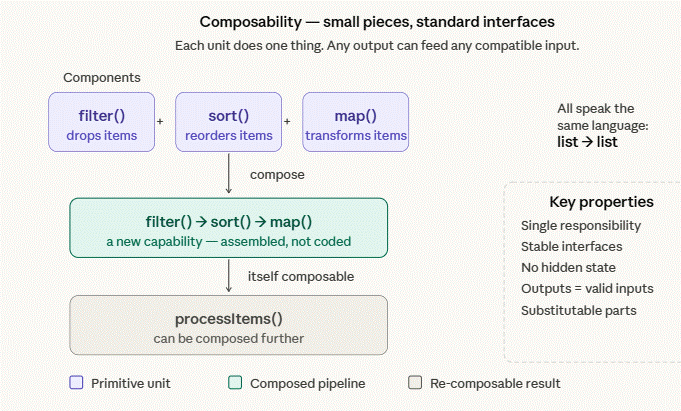
‘Composing’ could become a crucial skill for civil servants, as in the future they are required not so much to design or run yet another classic organogram of pyramids and roles, but rather to design institutions, and compose processes, that weave together different elements from a stack to meet specific needs and create public value. But as with many other tasks, this will require concentrations of talent - groups with the mix of technical expertise, understanding of government and imagination, to drive through change.
Third, governments need to start testing out these ways of thinking in different fields as the dynamics could be complex. Stack thinking could, for example, shape the future of law and regulations. These would be more modular, digital, machine readable and linked to other laws and regulations using AI. This might make it much easier for any individual or business to quickly discover the legality of any action (helped by a stack stretching from law as code through to syntheses of court judgements). But that would also be bound to throw up big challenges for today’s judges and court procedures. Testing and learning is the obvious way to go.
Strength without weight
The details of stack design are complex. The precise composability of stacks is quite a subtle issue (in technology, composability is not quite the same as modularity and while in some stacks there’s a need for mutual transparency, in others all that matters are the protocols of interconnection, with other layers essentially a black box). For governments there are difficult challenges ahead, whatever they do: for example, how to respond to ever more ubiquitous agentic AI which will allow people to overwhelm the public sector with requests for information, applications for benefits, or challenges to decisions.
But many decades after the Internet introduced stacks into everyday life, we should be ready to use stack thinking to open up new possibilities and help governments embody the ideal of ‘strength without weight’.
At a time of thin trust in government and acute fiscal pressures we badly need new options for public institutions (which is why TIAL was set up). The ones described here offer an alternative to the old model of laws and commands filtering down through rigid pyramid-like hierarchies.
Most governments are still essentially 19th century in their structures, with organograms very similar to those of the 1890s or the 1950s. These models may help to bring them into the 21st century.
…………..
[with thanks for useful comments and criticisms to Leo Quattrucci, Adler Yang, Jed Sundwall, Rutger ter Beek, Marcus Aterman and Ralph Heward Mills. I’ve had a longstanding interest in how to make governments better at handling horizontal cross-cutting issues: from an ESRC research project in the mid-90s to various initiatives in the UK government with horizontal budgets, teams, targets etc - including coining the phrase ‘joined-up government’ for a 1997 Tony Blair speech. I’ve also written about the options for holistic, cross-cutting, strategic whole of government work including recently for the European Commission (it’s striking how many governments forget what they once knew). Whether in governments, businesses or universities one of the marks now of a high performing innovative organisation is that a) it looks more like a matrix, with many horizontal as well as vertical teams, units and roles; and b) that it often looks quite messy. Too many governments remain neat but stuck in anachronistic organograms which means they struggle to make the most of either human brainpower or AI].
One of the issues of organisations or groups of organisations is how they structure themselves. What does not work very well is a group of people deciding what and how it should work. Their information is partial and almost never informed by the reality of the work.
An alternative approach is to trial different ways of working based around a set of principles that we do wish to be underpinning the new way of working. From those trials then the operating and management structure is an outcome.
As a former tech entrepreneur now working in and around government I see this too. I want how to view this through and ecological and transformational lens. Like a combo of Snowden and Bateson’s thinking. How to tend and have it grow to needs to be from where one is?